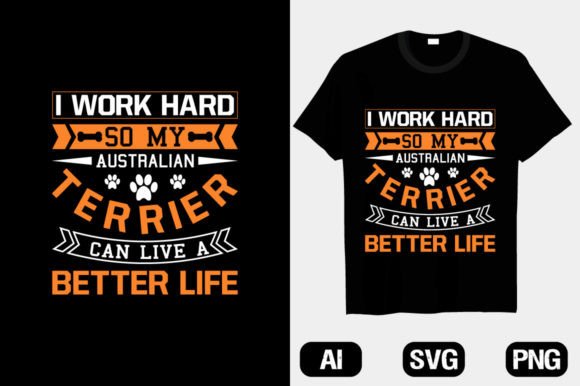
Australian Terrier Embroidery: A Review for Creative Projects
When you're looking at a design like I Work Hard so Australian Terrier Tshirt, it's not just about the cute dog. You're thinking about how it will translate into stitches, what kind of fabric it will sing on, and whether the sentiment behind it will resonate with your client or customer. I'm reviewing this as a graphics file intended for embroidery, looking at it from the practical perspective of someone who needs to turn a digital asset into a beautiful, durable finished product.
The First Impression: Humor with Heart
This design immediately lands with a warm, playful mood. It's not just a generic dog graphic; it's specifically an Australian Terrier, which gives it a niche charm for breed lovers. The phrase "I work hard so my Australian Terrier can live a better life" is the kind of relatable, affectionate humor that turns a simple image into a conversation piece. The layout feels balanced—the text isn't crowding the dog, and the dog illustration itself has a friendly, cartoon-like personality without being overly childish. This tells me it's versatile: it could work for a quirky gift for a friend, or as a signature product in a small shop catering to dog enthusiasts.
Where This Design Shines in Real Projects
Let's picture a real scenario. A client requests a custom embroidered tote bag as a birthday gift for a friend who is obsessed with her Aussie Terrier. You pull up this machine embroidery design. The clean lines and distinct shapes of the dog suggest it will stitch out well, with the dog's fur details likely translating into manageable fill stitch areas. The text, while a key part of the charm, is a practical consideration—you'll want to ensure your hoop size and stabilizer choice are solid to keep those letters crisp.
For craft business and Etsy sellers, this design is a ready-made story. It fits perfectly into a whole category of custom apparel: not just t-shirts, but also sweatshirts, aprons, and even kitchen towels for that dog-loving home cook. Imagine it on a cozy fleece blanket as nursery decor for a new baby in a dog-loving family, or as a small, neat embroidery on a cap. The theme is specific enough to feel personalized, yet universal enough (the love of dogs) to have broad appeal. For holiday gifts or wedding gifts for a pet-centric couple, this kind of personalized product adds a layer of thoughtfulness that buyers appreciate.
Considering the Stitching Environment
The success of any embroidery project depends on respecting the design's characteristics. Here, the dog illustration has areas that will require satin stitch or fill stitch for the body. On a tote bag made of canvas, that will look rich and solid. On a baby clothes item made of softer, thinner jersey, you'd need to carefully manage stitch density to prevent stiffness. The text, being integral to the joke, must remain readable. On curved surfaces like caps, you might consider simplifying or slightly adjusting the layout to ensure the phrase doesn't get distorted at the seams.
Caution Points: Where to Apply Careful Judgment
This design, while charming, has elements that demand a test run. The small lettering is the primary focus. On dark fabric, you'll need impeccable thread color contrast and possibly a bolder font weight in the file itself to ensure it pops. On textured fabrics like some sweaters or blankets, tiny details can get lost. I wouldn't recommend trying this on a very small hoop size; you need space for the text and the dog to maintain their clarity.
For products destined for frequent washing, like t-shirts or kitchen towels, the stitch density for the dog's fill areas should be checked. Too dense, and it becomes a rigid patch on a flexible garment. Too light, and it might wear down quicker. Always test the design on scrap fabric first, using the same material and stabilizer you plan for the final product. This is especially crucial if you're considering it for stretchy fabric.
The Impact on Your Business and Your Client
Using a design like this isn't just about making a cute item. It's about visual appeal that leads to buyer engagement. A well-embroidered version of this on a high-quality sweatshirt elevates it from a generic graphic to a handmade product with perceived value. It builds customer trust because the craftsmanship is visible. For a small shop product, it offers a clear, recognizable theme that can strengthen brand consistency if you specialize in animal-related goods.
The giftability is high. It’s funny, specific, and feels lovingly made. That emotional connection is what turns a sale into a repeat customer. In a craft fair setting, an item like an embroidered pillow cover with this design would likely draw smiles and immediate recognition from the right audience.
Essential Designer Notes Before You Hoop Up
My practical checklist for applying this digital embroidery file would be:
- Run a test on both light and dark scrap fabric to check thread color contrast.
- Review stitch density in the file preview, particularly in the dog's body and the text.
- Confirm hoop size suitability. The design likely needs a medium hoop to accommodate the width of the text without cramping.
- Inspect small details like the dog's eyes and the finer lines in the lettering. Will they stitch cleanly?
- Consider its use in black and white mockups for your Etsy listings or printable mockup to see how it reads without color.
- Always use proper stabilizer for the chosen fabric type; this is key for text clarity.
- Crucially, check whether the design works for both personal and commercial projects. The product description lists it as a graphics file. Before selling finished items or digital products, you must confirm licensing terms directly with the source. Never assume.
Ultimately, I Work Hard so Australian Terrier Tshirt as a embroidery design is a strong contender for projects where humor and niche appeal matter. It has the visual personality to stand out, and the practical layout to stitch well when handled with the standard care any good embroidery project deserves. It’s the kind of asset that, when executed properly on the right product, makes both the maker and the recipient smile—and that’s the core of a successful handmade presentation.