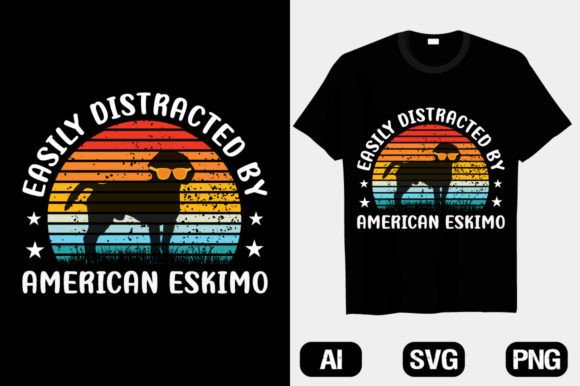
A Graphic Asset Review for Local Business Branding
As a brand designer working with small businesses, my first task is always to evaluate a graphic design asset not just as a standalone piece, but as a potential cornerstone of a real client's visual identity. Today, I’m reviewing Easily Distracted by Eskimo T-shirts, a design bundle centered around American Eskimo dogs, to see how it might perform in a practical local business project.
The First Impression: Playful, Friendly, and Nostalgic
Opening the files, the immediate mood is one of cheerful warmth and retro charm. The trendy vector style suggests a brand personality that is friendly, approachable, and unpretentious. It feels inherently playful and leans toward a handmade or boutique sensibility rather than a corporate one. For a local business, this translates into a potential for creating strong emotional connections—think of a customer smiling at a product label before they even read the text. This asset wouldn’t fit a luxury minimalist skincare line, but it would be a perfect match for a community-focused business like a dog-friendly bakery, a pet boutique, a handmade candle brand with a whimsical theme, or a children’s product shop.
Real-World Application for Packaging and Promotion
Let’s imagine I’m designing for a local artisan who makes all-natural dog treats. The core branding needs a logo, product labels, and social media graphics that communicate care and fun. Easily Distracted by Eskimo T-shirts offers more than just a T-shirt design; it provides a suite of graphic elements that can be adapted.
The primary illustration can become a hero graphic on the main label, instantly conveying the product’s purpose. Smaller, simplified elements from the design can be used as decorative accents on hang tags or as patterns on the packaging background. This consistency builds a stronger brand identity from shelf to social media.
Building a Cohesive Brand Identity from One Asset
For product labels, the clear, bold character of the dog illustration creates excellent shelf appeal and immediate product recognition. On a thank-you card included with orders, a smaller version of the graphic reinforces brand personality and fosters customer loyalty. For promotional visuals, such as flyers for a local pet market or a banner for the business’s website, the asset provides a ready-made focal point that ensures all marketing materials feel unified.
In digital spaces, these graphics become key for social media campaign graphics. A seasonal promotion—like “Summer Fun for Pups”—can use the asset as the base for Instagram posts or Facebook ads, ensuring the campaign visuals are polished and professional, directly improving customer trust.
Where This Design Asset Excels
For our hypothetical dog treat business, Easily Distracted by Eskimo T-shirts would work brilliantly in several key areas:
- Product Labels: As a central, eye-catching element.
- Packaging Accents: As patterns or icons on bags or boxes.
- Promotional Banners: For in-store signage or online ads.
- Decorative Brand Elements: On business cards or price lists.
- Social Media Graphics: Creating a consistent look for posts.
- Printable Inserts: For care instructions or brand stories.
Using it across these touchpoints creates a visual hierarchy where the friendly dog graphic leads the narrative, supported by typography and color, resulting in a more professional packaging and presentation overall.
Cautionary Notes for Professional Use
However, a responsible brand designer must also identify limitations. This asset, with its specific and decorative nature, should be used carefully in certain contexts. It would likely clash with formal corporate branding. On very small labels, like those for individual samples, the detailed illustration might need to be simplified to remain clear.
It shouldn’t be placed on crowded product packaging where it competes with essential text, such as ingredient lists or legal information. On low-contrast backgrounds, its impact could be lost. For brands aiming for a sleek, luxury aesthetic, this playful graphic would be a mismatch. The key is to let it shine as a primary decorative element, not force it into a supporting role where it gets lost.
Practical Designer Checks Before Client Delivery
Before I would ever propose this to a client for their commercial design project, I run through a standard checklist. First, I test it on real packaging mockups to see scale and placement. I check how it looks in black and white for potential non-color applications. Previewing it on a small label template is crucial to ensure readability.
I test it with the client’s potential brand colors to see if it harmonizes. Comparing it visually with competitor packaging helps gauge its uniqueness. For print, I review the file quality and, if it’s a vector SVG, inspect its editability for minor customizations. I also test it alongside different font styles—a clean sans serif for modernity, a playful script for whimsy—to find the best typographic pairing.
Most importantly, I confirm the commercial licensing terms. Using a graphic design asset for a client’s business branding, physical product sales, and marketing visuals requires clear, commercial usage rights. This due diligence is non-negotiable for professional branding work.
Final Evaluation for Local Business Value
Easily Distracted by Eskimo T-shirts, as a graphic asset, holds significant value for the right kind of local business. It’s not a generic clipart; it’s a themed illustration with a specific mood that can anchor a brand’s visual story. For a small business owner in the pet space, a handmade seller with an animal-loving audience, or a marketer crafting a seasonal campaign, this asset can accelerate the design process.
It provides a ready-made, high-quality graphic that boosts the professionalism of labels, packaging design, and promotional visuals from the start. By offering a clear visual theme, it helps build a more consistent brand identity, which in turn fosters stronger customer trust and emotional connection. For a designer, it’s a versatile tool that, when applied thoughtfully, can transform a simple product into a memorable brand experience on the shelf and online.